Delve into the world of complex portfolios as we uncover how wealth management advisors near you tackle the intricacies of wealth management with expertise and finesse.
Exploring the nuances of diversification, risk management, and leveraging technology, this article provides a comprehensive guide to navigating complex portfolios effectively.
Understanding Complex Portfolios
A complex portfolio in wealth management consists of a diverse range of assets and investments that require specialized knowledge and expertise to manage effectively.
Managing complex portfolios poses various challenges due to the intricate nature of the assets involved, the need for in-depth research and analysis, and the dynamic market conditions.
Examples of Assets in Complex Portfolios
- Alternative Investments: Such as hedge funds, private equity, and venture capital, which have unique risk-return profiles and liquidity constraints.
- Derivatives: Including options, futures, and swaps, which require a deep understanding of complex financial instruments and their implications.
- Real Estate Holdings: Commercial properties, residential properties, and real estate investment trusts (REITs) that involve property management, market analysis, and regulatory considerations.
- International Investments: Stocks, bonds, and currencies from different countries, exposing the portfolio to currency risk, geopolitical factors, and regulatory differences.
- Structured Products: Complex securities created by combining multiple financial instruments, such as collateralized debt obligations (CDOs) and mortgage-backed securities (MBS).
Strategies for Diversification
Diversification is a crucial aspect of managing complex portfolios as it helps spread risk and increase the potential for returns. Wealth management advisors utilize various strategies to effectively diversify portfolios, ensuring clients' investments are well-protected and balanced. Asset allocation plays a pivotal role in this process, determining how different assets are distributed within the portfolio to achieve the desired risk-return profile.
1. Asset Class Diversification
One common strategy advisors use is diversifying across different asset classes, such as stocks, bonds, real estate, and commodities. By investing in a mix of assets that react differently to market conditions, the overall portfolio becomes less susceptible to volatility in any one market.
2. Geographic Diversification
Advisors often recommend spreading investments across various geographic regions to reduce exposure to any single country's economic or political risks. This global approach helps mitigate the impact of local market downturns and currency fluctuations.
3. Sector Diversification
Another strategy involves diversifying within sectors by investing in companies from different industries. This approach helps minimize the risk associated with sector-specific events and allows for potential growth opportunities in multiple segments of the economy.
4. Time Horizon Diversification
Wealth managers also consider diversification based on the client's time horizon and investment goals. By allocating assets across short-term, medium-term, and long-term investments, they can manage risk while pursuing different objectives simultaneously.
Risk Management Techniques
Effective risk management is crucial when dealing with complex portfolios to ensure the protection of investments and minimize potential losses. While traditional risk management approaches focus on diversification and asset allocation, managing risk in complex portfolios requires additional strategies tailored to the specific needs and characteristics of these investments.
Advanced Risk Assessment
In complex portfolios, risk assessment goes beyond simply looking at the individual components of the portfolio. Advisors need to analyze the interactions between different assets, sectors, and market conditions to identify potential sources of risk. This may involve using sophisticated quantitative models and risk management tools to measure and monitor the overall risk exposure of the portfolio.
- Utilizing stress testing and scenario analysis to evaluate how the portfolio would perform under different market conditions or extreme events.
- Implementing dynamic risk management techniques that adjust the portfolio's risk exposure based on changing market conditions or investment objectives.
- Employing hedging strategies such as options, futures, or other derivatives to mitigate specific risks within the portfolio.
By conducting in-depth risk assessments and using advanced risk management techniques, advisors can proactively protect complex portfolios from potential downside risks.
Risk Mitigation Strategies
In addition to identifying and measuring risks, advisors must also develop strategies to mitigate these risks and protect the portfolio from significant losses.
- Implementing stop-loss orders or limit orders to automatically sell assets if they reach predefined price levels, limiting potential losses.
- Diversifying across different asset classes, geographic regions, and investment styles to reduce concentration risk and enhance portfolio resilience.
- Regularly rebalancing the portfolio to maintain the desired risk-return profile and adjust to changing market conditions.
By combining advanced risk assessment techniques with proactive risk mitigation strategies, wealth management advisors can effectively manage risks in complex portfolios and help clients achieve their investment objectives.
Leveraging Technology
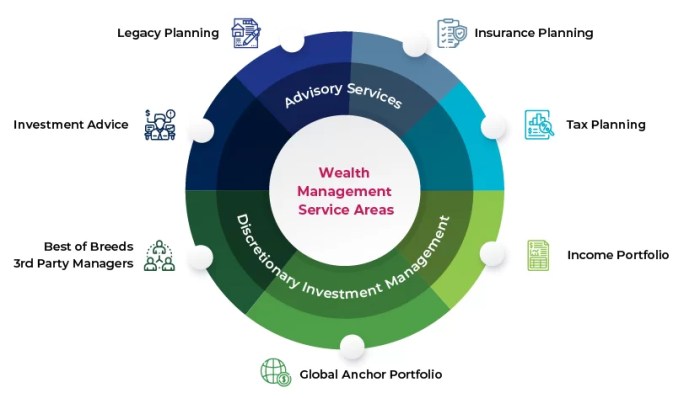
Wealth management advisors today rely heavily on technology to handle complex portfolios efficiently and effectively. By leveraging various tools and software, these professionals can streamline their processes, analyze data more accurately, and make informed decisions for their clients.
Portfolio Management Software
- One key tool used by wealth management advisors is portfolio management software, which helps them track and manage investments across multiple asset classes. This software enables advisors to monitor performance, analyze risk, and rebalance portfolios based on client goals and market conditions.
- Popular portfolio management software includes platforms like Morningstar, Charles River, and Aladdin by BlackRock, which offer robust features for portfolio analysis, risk assessment, and reporting.
Automation in Portfolio Management
- Automation plays a significant role in streamlining portfolio management processes for wealth management advisors. By automating tasks such as data entry, trade execution, and reporting, advisors can save time and reduce the risk of human error.
- Robo-advisors are a prime example of automation in portfolio management, using algorithms to create and manage investment portfolios based on client preferences and risk tolerance. These digital platforms offer clients a cost-effective and hands-off approach to investing.
Final Wrap-Up
In conclusion, managing complex portfolios requires a delicate balance of knowledge, strategy, and innovation. By understanding the challenges and employing the right techniques, wealth management advisors can steer clients towards financial success and security.
FAQ Insights
What defines a complex portfolio in wealth management?
A complex portfolio typically consists of a diverse range of assets, often including alternative investments and derivatives, requiring sophisticated management strategies.
How do advisors diversify complex portfolios effectively?
Advisors utilize various strategies such as asset allocation, sector rotation, and investing in different asset classes to achieve diversification in complex portfolios.
What role does technology play in managing complex portfolios?
Technology enables advisors to analyze data, monitor investments in real-time, and automate routine tasks, enhancing efficiency and decision-making in handling complex portfolios.