
Delving into Multi Family Office Services vs Single Family Offices: Key Differences, this introduction immerses readers in a unique and compelling narrative that explores the nuances between these two types of wealth management entities. From understanding the core services to analyzing the distinct client bases, this discussion aims to shed light on the key disparities in a manner that is both informative and engaging.
As we delve deeper into the realm of Multi Family Office Services vs Single Family Offices, we uncover the intricate details that set them apart and highlight their respective advantages and offerings.
Understanding Multi Family Offices (MFOs)
Multi Family Offices (MFOs) are firms that provide comprehensive wealth management services to multiple high-net-worth families. These offices cater to the needs of several wealthy families, offering a range of financial services under one roof.
Primary Services Offered by Multi Family Offices
- Investment management: MFOs help families manage their investment portfolios, including asset allocation, risk management, and performance monitoring.
- Financial planning: They assist in creating customized financial plans to achieve the families' long-term financial goals.
- Tax planning: MFOs provide tax optimization strategies to minimize the tax liabilities of the families.
- Estate planning: They help families plan for the transfer of wealth to future generations while minimizing estate taxes.
- Philanthropic services: MFOs assist families in creating and managing charitable giving strategies.
Comparison of Multi Family Offices with Other Wealth Management Entities
- Single Family Offices (SFOs) vs. MFOs: SFOs are dedicated to serving a single wealthy family, while MFOs cater to multiple families. MFOs can provide cost-effective solutions due to shared resources.
- Private Banks vs. MFOs: Private banks primarily offer banking services along with wealth management, while MFOs focus solely on comprehensive wealth management services for families.
- Asset Management Firms vs. MFOs: Asset management firms specialize in managing investment portfolios, whereas MFOs offer a broader range of services beyond just investment management.
Understanding Single Family Offices (SFOs)

Single Family Offices (SFOs) are private wealth management firms that cater to the financial needs of a single wealthy family. The primary purpose of SFOs is to manage the investments, estate planning, tax strategies, and other financial affairs of the family to preserve and grow their wealth for future generations.Key Characteristics that differentiate Single Family Offices from Multi Family Offices:
1. Client Base
Single Family Offices serve only one wealthy family, providing personalized and tailored services based on the specific needs and goals of that family. In contrast, Multi Family Offices cater to the financial needs of multiple unrelated families.
2. Control and Decision-Making
In SFOs, the family members have direct control over the investment decisions and overall management of their wealth. This allows for a high level of customization and flexibility in the financial strategies implemented. On the other hand, Multi Family Offices may have a more standardized approach due to serving multiple families with varying needs.
3. Privacy and Confidentiality
SFOs prioritize confidentiality and privacy for the family members, as they are the sole clients of the firm. This ensures that sensitive financial information and personal details are kept secure and away from public scrutiny. In comparison, Multi Family Offices may have to balance the privacy needs of multiple families.Examples of successful Single Family Offices and their impact:
The Rockefeller Family Office
Established by the Rockefeller family, this SFO has played a significant role in managing the family's vast wealth across generations and philanthropic endeavors.
The Soros Family Office
Founded by billionaire investor George Soros, this SFO has been instrumental in managing his personal wealth and supporting various charitable causes.
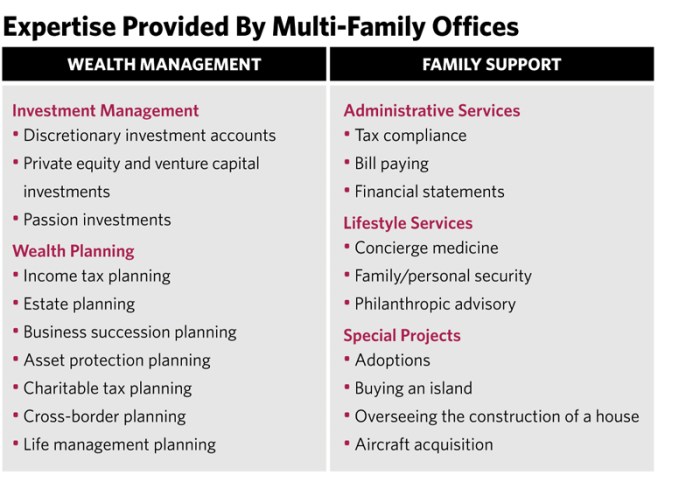
Services Offered by Multi Family Offices
Multi Family Offices (MFOs) provide a wide range of services tailored to the needs of multiple wealthy families. These services are designed to offer comprehensive financial management and support to affluent individuals and families, encompassing various aspects of wealth management.
Range of Services
- Investment Management: MFOs offer personalized investment strategies and portfolio management to help clients achieve their financial goals.
- Estate Planning: They assist in creating and implementing estate plans to preserve and transfer wealth to future generations.
- Tax Planning: MFOs provide tax planning strategies to minimize tax liabilities and optimize financial outcomes.
- Financial Planning: They offer comprehensive financial planning services, including cash flow management, retirement planning, and risk management.
- Philanthropic Services: MFOs help clients with charitable giving strategies and establishing philanthropic foundations.
Comparison with Single Family Offices
MFOs differ from Single Family Offices (SFOs) in the sense that they cater to multiple families instead of just one. While SFOs offer highly customized services exclusively to a single wealthy family, MFOs provide a more standardized yet still personalized approach to wealth management.
Advantages of Utilizing MFO Services
- Diversification: By pooling resources with other families, clients can benefit from diversified investment opportunities and lower costs.
- Cost Efficiency: MFOs can provide high-quality services at a lower cost compared to setting up and maintaining an SFO.
- Expertise and Resources: MFOs have a team of professionals with expertise in various financial areas, offering a broader range of services to clients.
- Family Governance: MFOs can help families establish governance structures and facilitate communication among family members regarding wealth management decisions.
Services Offered by Single Family Offices
Single Family Offices (SFOs) provide a wide range of specialized services tailored to meet the unique needs of ultra-high-net-worth families. These services are personalized and designed to address the specific requirements and goals of each family, ensuring comprehensive wealth management and preservation.
Customized Wealth Management
- Personalized Investment Strategies: SFOs create customized investment portfolios based on the family's risk tolerance, financial goals, and preferences.
- Asset Allocation: SFOs help families diversify their assets across various classes to optimize returns and mitigate risks.
- Financial Planning: SFOs assist in developing long-term financial plans to secure the family's wealth for future generations.
Estate Planning and Philanthropy
- Estate Planning: SFOs offer expertise in structuring estate plans, trusts, and succession strategies to ensure smooth wealth transfer and minimize tax implications.
- Philanthropic Services: SFOs help families establish charitable foundations, manage donations, and create philanthropic initiatives aligned with their values and goals.
Concierge Services
- Lifestyle Management: SFOs provide personalized services such as travel planning, property management, and luxury concierge services to enhance the family's quality of life.
- Family Governance: SFOs assist in establishing family offices, governance structures, and policies to maintain family cohesion and communication.
Key Differences Between Multi Family Offices and Single Family Offices
Multi Family Offices (MFOs) and Single Family Offices (SFOs) cater to different client bases, with MFOs serving multiple families while SFOs focus on a single wealthy family. The fundamental differences in the client base result in varying approaches to investment strategies and fee structures.
Client Base
- MFOs work with several affluent families, pooling their resources to benefit from economies of scale and shared expertise.
- SFOs, on the other hand, exclusively serve one ultra-high-net-worth family, tailoring their services to the unique needs and preferences of that family.
Investment Strategies
- MFOs typically employ a more diversified investment approach, spreading risks across different asset classes and investment opportunities to maximize returns for multiple families.
- SFOs often focus on more concentrated investment strategies, such as direct investments in private companies or real estate, aligning closely with the specific goals and risk tolerance of the single family they serve.
Fee Structures
- MFOs commonly charge fees based on a percentage of assets under management (AUM) or a retainer fee, which is shared among the participating families.
- SFOs may charge a percentage of AUM, but they can also negotiate performance-based fees or flat fees, tailored to the individual preferences of the single family client.
Summary
In conclusion, the comparison between Multi Family Office Services and Single Family Offices unveils crucial distinctions that play a pivotal role in wealth management decisions. By understanding these disparities, individuals can make informed choices that align with their financial goals and preferences.
Frequently Asked Questions
What sets Multi Family Offices apart from Single Family Offices?
Multi Family Offices cater to multiple wealthy families, offering a range of services, while Single Family Offices are dedicated to serving the needs of a single affluent family.
How do fee structures differ between Multi Family Offices and Single Family Offices?
Multi Family Offices usually charge fees based on assets under management, whereas Single Family Offices may have more flexible fee arrangements tailored to the specific family's requirements.
What advantages do Multi Family Offices offer over Single Family Offices?
Multi Family Offices provide shared resources and expertise across multiple families, potentially leading to cost efficiencies and broader service offerings compared to the more personalized approach of Single Family Offices.